A brief history of the Department
Around 1864, there was a famine in Orissa and then Lieutenant-Governor of Bengal, Sir George Campbell was firm that agricultural education was key to avoiding similar disasters and following the recommendations of Sir John Strachey’s Famine Commission, a need to carry out scientific study to improve the food supply in India was noted. In order to fulfill this requirement, and on the recommendation of J.D. Hooker, Dr George Watt, a graduate of Doctor of Medicine from the University of Glasgow was selected for the post of Professor of Botany, at Presidency College, Calcutta University. He accepted and moved to India in late 1873 but he joined as a professor of botany in Hooghly College in January 1874. Before George watt, J. willson from Trinity College, Dublin, joined Hooghly College as Professor of Chemistry and Botany in March 1873.
Towards the end of 1878, Jadav Chandra Banerjee, Assistant Surgeon, taught Chemistry and Botany as Assistant Lecturer. But unfortunately, he died in the next year.
In 1875, Dr George Watt laid out a botanic garden in the western half of the College compound and eastern strip of Madrasa Hostel. A large number of plant specimens from Shibpur Botanic Garden were planted out. Several cement ponds were made for the water plants. In 1876 a special grant of Rupees 1000/- was made for books on Botany. A large staff of Malis and menials attended the garden and the Herbarium. The Botany Department of the college was at that time was most efficient in Bengal Province.
As part of the Indian Government service, Dr George Watt had a number of other roles.
• Burma-Manipur Boundary Commission as Medical Officer, 1882
• Scientific Assistant Secretary, Government of India, 1881
• In-charge of the India Section of the Calcutta International Exhibition, 1884
• Commissioner, Colonial and Indian Exhibition, London, 1885–86
• Reporter to Government of India on Economic Products, 1887–1903
• Governor of Imperial Institute, 1892
• Editor, The Agricultural Ledger, 1892–1903
• President, Pharmacological Section of the Indian Medical Congress, 1894
• In-charge of Calcutta Industrial Museum, 1894-03
• Honorary Secretary, Indigenous Drug Committee of India, 1901
• Director, Indian Art Exhibition, Delhi, 1903
Probably his magnum opus was A Dictionary of the Economic Products of India. The 9 parts published in between 1889-1893 has been regarded as the greatest compilation of commercial plants in India and covers both agricultural and non-agricultural plants.
Sir George Watt is credited with devising a system of where numbered tags were detached from a field book and could be tied to specimens as they were collected in the field. This made it much simpler to correctly identify the correct specimen with the correct entry in a field book. His system became widely used.
Sir George Watt also published an article Tea and the Tea Plant looking at the commercial varieties of Tea grown in India in the Journal of the Royal Horticultural Society. The specimens used to illustrate the varieties are held at Royal Botanic Garden Edinburgh. For his services to Indian botany and science he was knighted in 1903.
From his time in India, he amassed a sizable personal herbarium of around 20,000 collections which were donated to the Royal Botanic Garden Edinburgh. It contains over 150 Type specimens of Indian taxa described by Watt and others.
In 1907 Watt published a major monograph on the Wild and Cultivated Cotton Plants of the World in which he published many new taxa in the genus Gossypium. He also published new Indian species in the family Primulaceae (Primula, Androsace)
After transfer of Dr Watt, Dr Gregg had carried on the teaching of Botany. But he went on furlough in 1886 and the question of retention of classes was raised. Botany had once been very popular, but new University Regulation added Physiology to Botany and the number of students immediately fell. The Principal recommended abolition, but Mr. Croft, then Director took a large view. “If Botany classes at Hooghly are to be closed, there will remain only the class at Cuttack-a small and insignificant remnant-and it may be apprehended that even that classes will be forced to follow suit, owing to the difficulty in finding teachers in Botany, who have hitherto been found among the MA students of Hooghly College. “The only possibility” He continued, “of creating a class of Indian Botanists lies in the maintenance of Botany classes in some of the Government Colleges”. But these arguments were wasted and Government decided to abolish the classes as there was no real demand of the subject. The result of that attitude, Botany was never been taught in any college in Bengal apart from Presidency College during the British Period.
Post-independence period
After the establishment of Burdwan University on 15th June 1960 with some humanities departments, gradually science departments were included and Hooghly Mohsin College, erstwhile Hooghly College became one of the affiliated colleges under Burdwan University.
Department of Botany, Hooghly Mohsin College got rebirth in 1965 with Honours course. However, intermediate course and degree course for pass students were introduced before 1965.
M.Sc. in Botany classes started in this college from 2007-08 academic sessions, affiliated under the University of Burdwan, along with under graduate courses for the pass and Honours students.
Source: 1. History of Hooghly College, 1836 -1936, by K. Zachariah.
2. George Watt(botanist)- Wikipedia
3. Sir George Watt(1851-1930)-Botanics Stories. https://stories.rbge.org.uk
4. https://www.buruniv.ac.in
| Sl. No. | Programme / Course Name | Level of Study |
|---|---|---|
| 1 |
B.Sc. Major
Botany (Major)
|
UG |
| 2 |
B.Sc. Minor
Botany (Minor)
|
UG |
| 3 |
M.Sc.
Botany
|
PG |
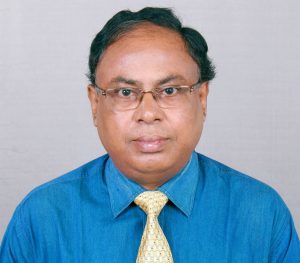
DR. SUBRATA MITRA
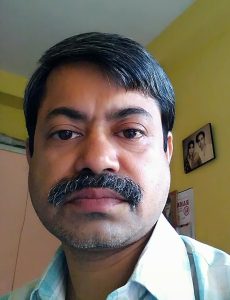
Dr. Biswajit De
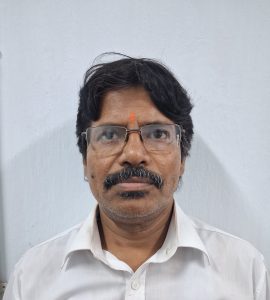
Dr. Kausik Majumder
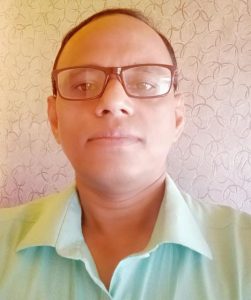
Pulakesh Parai
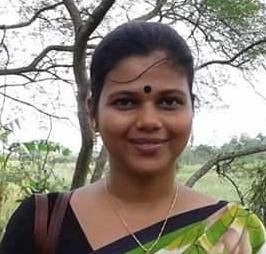
Moutushi Sen
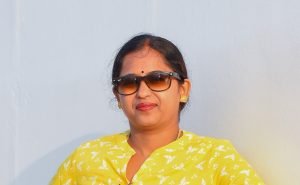
Dr. Manashi Aditya
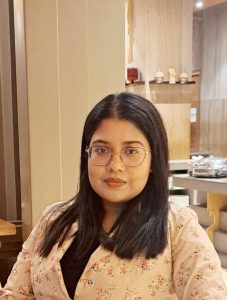
Dr Sinjini Mondal
DEPARTMENTAL SEMINARS/WEBINARS/WORKSHOPS HELD DURING THE SESSIONS
| Session | Sl No. | Title of Seminar/Webinar/Workshop | Resource Person | No. of Participants |
|---|---|---|---|---|
| 2023-24 | 1 | One day Students Seminar on “Emerging Trends in Plant Sciences” |
A total of 15 students among all semesters of both Under-graduate and Post-graduate course
|
57 |
| 2022-23 | 2 | One day International Seminar on “Adaptation in Extreme Environment in Context to Microbial Biotechnology” |
Dr. Srabona Sarkar
Post-doctoral Researcher, The University of Maule, Talca, Chille |
87 |
| ACADEMIC SESSION | DATE | ABOUT THE PROGRAM | NUMBER OF STUDENTS PARTICIPATE | LINK |
|---|---|---|---|---|
| 2024-2025 | (5-10) May 2025 | Floristic Diversity Study of Darjeeling Himalayan Forest (Lepchajagat, Dhotrey, Tonglu and Adjoining Areas) | 27 | — |
| 07 March 2025 | Excursion to AJC Bose Botanical Garden | 32 | ||
| 07 February 2025 | Nature Study and Botanical Excursion | 52 | ||
| 17 January 2025 | Parent-Teacher Meeting | 35 | ||
| 2023-2024 | (3-8) June 2024 | Botanical Excursion to East Himalayan Hills | 38 | — |
| 29 February 2024 | Educational Visit to Rice Research Station, Chinsurah | 42 | ||
| 05 September 2023 | Teachers’ Day Celebration | 65 | ||
| 2022-2023 | 26 June - 01 July 2023 | Excursion of Shillong, Cherapunji, Dawki and adjoining areas of Meghalaya | 38 | — |
| 31 March 2023 | Excursion to AJC Bose Botanical Garden | 55 | ||
| 09 November 2022 | Nature Study of the College Campus | 32 | ||
| 05 September 2022 | Teachers’ Day Celebration | 87 |